Most Plymouth sellers finish the Minnesota disclosure form and feel like the hard part is over. They have answered honestly, checked the boxes, attached the furnace receipt, and mailed nothing back that isn't true. That feels like due diligence. It is due diligence, for one narrow question: what do you already know?
The inspection that follows a few weeks later is answering a completely different question, and it is not going to care what you knew. A licensed inspector, hired by your buyer, is going to open the sump pit, run a camera down the sewer line, look for pipe material behind the water heater, and set a radon canister in the lowest livable level of the house, all regardless of what you wrote on the form. In Plymouth, what that inspection turns up is remarkably predictable, and the predictor is not the price of your house. It is the decade your neighborhood was built.
Plymouth grew from a farming township of a few thousand people into one of Minnesota's largest suburbs across a fifty-year construction boom that ran roughly from the 1970s through the 2000s. That means the city never settled into one uniform building type the way an older, fully built-out city did, and it never became one master-planned community the way a brand new suburb does either. It built in geographic waves, and each wave left its own fingerprint on foundations, pipes, and drainage. Knowing which wave your address belongs to tells you almost exactly what the inspector is going to find, whether or not it ever belonged on your disclosure form.
What Minnesota Actually Requires You to Disclose
Minnesota's seller disclosure law, found in Minnesota Statutes 513.52 through 513.60, requires you to put in writing any material fact you are aware of that could significantly affect a buyer's use or enjoyment of the property. That covers things like a wet basement you experienced, a furnace that has needed repeated repairs, or a well or septic system on the property. The standard for what you must disclose is knowledge, not investigation. If you never tested for something, you generally have nothing to report about it.
Radon works the same way under Minnesota's separate radon statute. Before a purchase agreement is signed, a seller must disclose in writing any radon test results already on file and hand over the state's radon warning statement, but the law does not require the seller to test in the first place. A homeowner who has lived in a Plymouth rambler for fifteen years without ever running a radon canister can honestly write "unknown" and be fully compliant.
That gap between what the law asks and what physics is doing under the slab is where Plymouth sellers get caught off guard, because Hennepin County sits in the highest-risk radon zone the EPA tracks, and state health data puts roughly four in ten Minnesota homes above the federal action level. Your buyer is very likely to test anyway. The Minnesota Department of Health recommends every buyer test before closing, and most buyer's agents build a radon contingency into the purchase agreement as a matter of routine. You were never required to know your number. Your buyer is about to find out what it is.
Three Plymouth Eras, Three Different Inspection Stories
The clearest way to see this is geographic. East Plymouth, the older, tree-lined pocket around Medicine Lake and Parkers Lake, is largely ramblers, split-levels, and modified two-stories built between the 1960s and 1980s. Central Plymouth, along the Bass Lake Road and Highway 55 corridors, filled in later with two-story traditionals from the 1980s and 1990s growth boom, much of it built on former farmland. New construction sits mostly in the smaller remaining pockets where undeveloped land is scarce. Each of those three stories produces a different inspection report.
| Era and Location | Typical Construction | What Inspectors Commonly Flag |
|---|---|---|
| Pre-1980s, East Plymouth near Medicine Lake and Parkers Lake | Ramblers and split-levels on older block or transitional poured concrete foundations | Perched water tables, drainage systems installed decades ago and never refreshed, clay sewer laterals prone to root intrusion, and in some cases plumbing runs installed during the years polybutylene pipe was standard |
| 1980s to 1990s, Central Plymouth along Bass Lake Road and Highway 55 | Two-story traditionals on monolithic poured concrete, built on former farmland | Uneven settlement where the slab sits over old peat or muck pockets, cove joint or lateral cracks in the foundation wall, and original drain tile that has been silting up for thirty-plus years |
| Newer subdivisions | Modern platted lots, slab or full basement construction | Attic ventilation shortcuts and grading that has not fully settled |
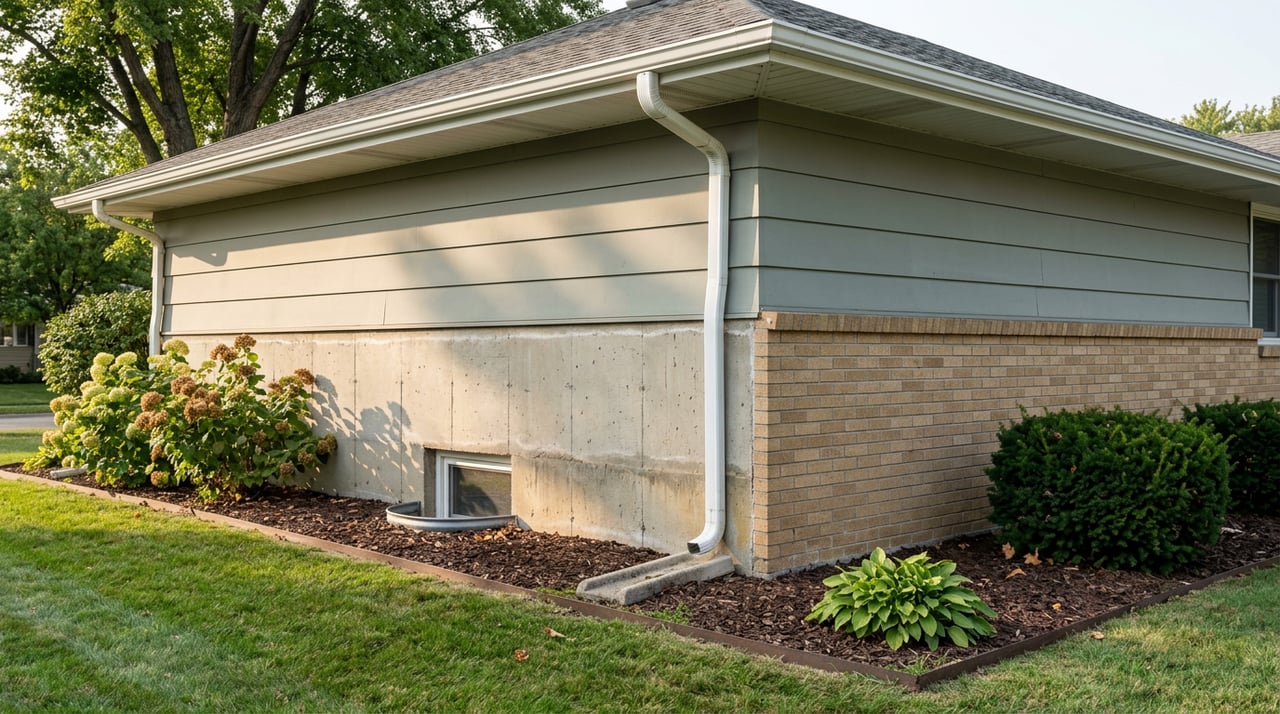
The mechanism behind the middle row is worth understanding because it is genuinely local and it explains why two Plymouth homes of similar age and price can have completely different inspection outcomes. Plymouth sits on glacial till, the unsorted mix of clay, silt, sand, and gravel left behind by the retreating glacier that once covered this part of Minnesota. Till is fine to build on structurally, but the clay in it holds water against a foundation wall, and subdivisions platted on former farmland often sat on drained wetland pockets and pockets of organic muck that compress unevenly over time. A local waterproofing contractor who works these neighborhoods regularly describes it as a clay bowl effect, where backfilled soil around the foundation traps water against the wall long after the original grading has settled. That is not a defect the seller caused and not something most owners would ever think to disclose, because nothing has necessarily gone wrong yet. It is simply the ground doing what glacial till does, and it shows up on an inspection as hairline cracking or a slightly damp cove joint whether or not anyone ever filed a claim.
The Two Pipes Worth Knowing About Before the Buyer's Inspector Does
Two plumbing and sewer details are common enough in Plymouth's older stock that they are worth understanding on your own terms rather than learning about them from a buyer's repair request.
The first is polybutylene supply piping, the gray plastic pipe that was standard in new construction across the country from the late 1970s into the mid 1990s. Plymouth's oldest housing stock sits squarely inside that window. Polybutylene is not something Minnesota law requires you to specifically disclose, and a seller who never had a leak may have no idea whether it is behind their own walls. But it is exactly the kind of thing an inspector or a buyer's plumber will look for, and its presence tends to narrow the buyer pool and complicate financing with some lenders, even when the pipe has never failed.
The second is the sewer lateral, the line connecting the house to the city main. Homes built before 1980 in Plymouth's older neighborhoods more commonly used clay tile for that run, and clay tile is prone to joint separation and root intrusion as mature trees mature further. A sewer scope is now a routine add-on during Twin Cities inspections, and in the pre-1980 pockets around Medicine Lake and Parkers Lake, it is one of the more likely places for a real finding to show up.
What This Means If You're Listing This Fall
None of this is a reason to panic, and it is not a reason to over-disclose things you do not actually know. The Minnesota form asks for your knowledge, not a guess. What it does mean is that "I have nothing to disclose" and "nothing is going to come up" are two different statements, and conflating them is where sellers lose leverage at the negotiating table. A seller who understands that their 1985 Central Plymouth two-story sits on former farmland, that a cove joint crack is a known pattern for that ground rather than a hidden defect, and that a radon test is coming whether or not the law required one, walks into that negotiation with an explanation ready instead of a surprise to manage.
If you are weighing whether to test for radon before you list, have a plumber confirm your supply line material, or simply want a second set of eyes on how your specific pocket of Plymouth tends to show up on an inspection report, that is exactly the kind of groundwork a concierge listing process should handle before the sign goes in the yard, not after an offer falls through.
Frequently Asked Questions
Do I have to test for radon before I sell my Plymouth home? No. Minnesota law only requires you to disclose radon test results you already have. You are not required to test, but because Hennepin County is in the highest EPA risk zone, most buyers will test during their inspection contingency regardless.
What if I don't know whether my home has polybutylene pipe? You are only required to disclose what you know. If you have never had it identified, "unknown" is an accurate answer. A plumber can typically confirm the pipe material in a short visit if you would rather know before a buyer's inspector finds it first.
Does a cove joint crack or minor basement dampness have to go on the disclosure form? Only if you are aware of an actual issue, such as water intrusion you experienced. Hairline cracking related to normal foundation settlement in Plymouth's glacial till is common and is not automatically a disclosable defect unless it has caused a problem you know about.
Do I need a Well Disclosure Certificate if my property is on city water? The certificate is only required if the property has a well, active, inactive, or sealed. Most homes inside Plymouth's core neighborhoods are on municipal water and sewer, but properties on larger lots toward the city's edges sometimes still have a well on record.
If you are getting ready to list in Plymouth this fall and want to walk through what your specific neighborhood's inspection history tends to look like, Avenues & Acres Home Team can map it out with you before you sign anything.