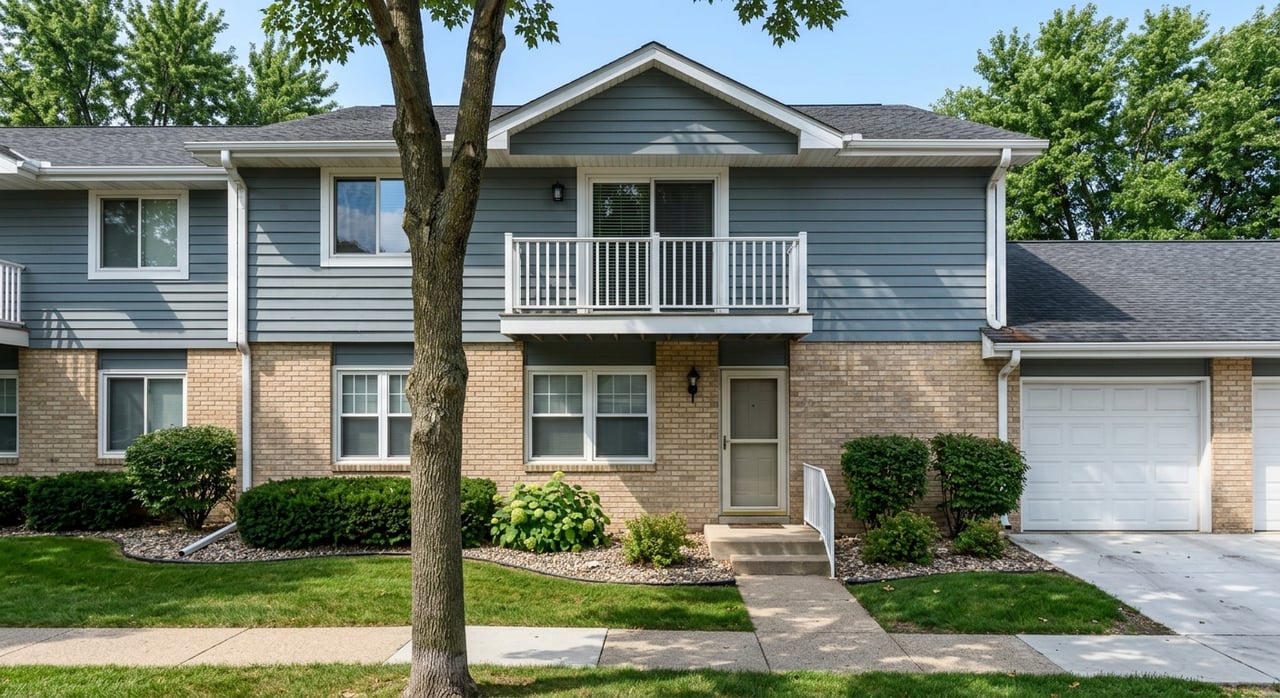
Thinking about buying a condo or townhome in Minnetonka as an investment? You are not alone, but this is not the kind of market where you want to rely on guesswork. In a built-out suburb with higher price points, limited land, and association rules that can shape your returns, the best opportunities usually go to buyers who do their homework upfront. This guide will help you understand how Minnetonka’s attached-housing market works, what to watch for, and how to evaluate a property with more confidence. Let’s dive in.
Why Minnetonka draws investor interest
Minnetonka offers a mix of stability, amenities, and housing variety that can appeal to small investors. The city is a fully developed suburban community about eight miles west of Minneapolis, and Census QuickFacts estimates its 2024 population at 52,651. The same source shows a 71.6% owner-occupied housing rate, a median owner-occupied home value of $475,800, and a median gross rent of $1,779.
That combination matters if you are comparing Minnetonka to a lower-cost entry market. You are looking at a more established suburb where attached housing can offer a lower-maintenance ownership option, but not necessarily a low-cost one. For many buyers, the appeal is long-term value, location, and convenience rather than bargain pricing.
Minnetonka also has a sizable older population. According to Census QuickFacts, 22.8% of residents are age 65 or older, and the city’s long-range planning emphasizes housing choice for an aging population. That can support ongoing demand for homes with less exterior upkeep and easier day-to-day living.
What counts as attached housing
If you are investing in Minnetonka townhomes and condos, it helps to know how the city thinks about these property types. In Minnetonka’s 2040 land-use chapter, attached housing is part of the city’s planned housing mix, not an afterthought.
The city says low-density residential areas can include duplexes and attached townhomes. Medium-density areas typically include duplexes, townhouses, quads, and low-rise multifamily buildings. High-density areas typically include apartment or condominium units in multistory buildings.
For you, that means attached housing exists in several forms and settings across Minnetonka. Some communities may feel more residential and tucked into established areas, while others may be closer to employment centers, services, and transportation corridors. That difference can affect resale appeal, rentability, and monthly carrying costs.
Minnetonka is a higher-cost market
A key point for investors is simple: Minnetonka is not a low-cost suburban entry market. Recent market snapshots vary by source and timing, but they all point to values in the mid-$400,000s to low-$500,000s.
Redfin’s Minnetonka housing market page reported a February 2026 median sale price of $515,000 and 86 days on market. Zillow, cited in the same research context, reported an average home value of $472,418 and a January 2026 median sale price of $456,333. The exact number matters less than the pattern: buyers are operating in a relatively expensive, slower-moving suburban market.
That can be good news and bad news. On one hand, limited supply and established demand can help support value. On the other hand, higher acquisition costs leave less room for mistakes on HOA health, upcoming repairs, or rental restrictions.
Limited land changes the equation
Minnetonka’s 2040 plan notes that the city has limited vacant land and high land costs, which can make it harder to provide a wide variety of housing types. For investors, that is more than a planning detail.
In a market with limited room for new supply, existing attached communities may hold their place in the market well. But that also means building-specific factors become even more important. Two condos with similar square footage can perform very differently if one association has strong reserves and the other has deferred maintenance.
This is why condo and townhome investing in Minnetonka often comes down to details, not just broad market averages. The unit itself matters, but the association, location, and future capital needs often matter just as much.
Location still drives demand
Even in a mature suburb, location remains one of the biggest drivers of buyer and renter interest. Minnetonka’s planning documents say higher-density housing should be located near services, employment centers, and transportation corridors, which gives you a useful framework when screening opportunities.
A strong local example is the Opus area, which the city describes as a mixed-use community near Highway 169, Highway 62, and Shady Oak Road. The city says the area includes residential apartments, major employment centers, more than 15,000 employees, 4,000 residents, and six miles of trails. It also says planned development will add more than 1,000 housing units, with over half designated as affordable.
That does not mean every good investment must be in Opus. It does mean you should pay attention to how close a property is to major job centers, transportation routes, parks, trails, and daily services. Minnetonka also reports having more than 50 parks and open spaces and more than 100 miles of trails, which supports the convenience and amenity value that many attached-home buyers want.
Your real carrying cost may be higher
One of the most common mistakes in condo and townhome investing is underestimating monthly ownership costs. In Minnetonka, Census QuickFacts shows median monthly owner costs of $2,540 with a mortgage and $978 without a mortgage.
Those figures are useful, but they do not include HOA dues, special assessments, or future reserve needs. For attached housing, those costs can materially change your numbers. A unit that looks reasonable at first glance may feel very different once you add association dues, insurance gaps, maintenance responsibilities, and possible assessments.
Property taxes matter too. Minnetonka’s property tax page explains that annual statements are mailed by Hennepin County, the city makes up about one-fourth of a homeowner’s total property tax bill, and county and school taxes each account for about one-third. The city also notes that its tax rate is typically one of the lowest among comparable metro-area cities.
That is helpful context, but you still need to evaluate the total monthly picture on each property. A lower city tax rate does not cancel out high HOA dues or a building with major repairs on the horizon.
How condo and townhome taxes work
For many buyers, attached housing can feel confusing from a tax and ownership standpoint. Under Minnesota statute 515B.1-105, each condo unit and many townhome units in a common-interest community are treated as separate parcels of real estate and are separately taxed and assessed. Common elements are not separately taxed.
That matters when you compare a condo or townhome to other ownership structures. It also reinforces why you should review the specific tax history and monthly obligations for the exact unit you are considering, not just rely on broad assumptions about the complex.
Low maintenance does not mean no maintenance
A condo or townhome can reduce some exterior upkeep, but it does not remove the need for planning. Minnetonka’s building permit page says permits are required for many construction, alteration, repair, and replacement projects, including roofing, siding, windows, decks, and interior remodeling.
The city also says electrical work on condominiums, apartments, and some townhomes must be completed by licensed, bonded, and insured contractors. Homeowners may not do electrical work in condominiums or in rented portions of a building.
If you are buying with plans to update a unit, these rules matter. They can affect your renovation timeline, your budget, and whether your planned improvements are practical within association rules and city requirements.
HOA documents can make or break the deal
In Minnetonka attached housing, association due diligence is not optional. Minnesota law requires sellers in common-interest communities to provide important documents, including the declaration, articles of incorporation, bylaws, rules and regulations, and a resale disclosure certificate, under statute 515B.4-107.
That resale certificate must disclose assessments, added fees, approved extraordinary expenditures, reserve information, insurance coverage, judgments, lawsuits, and other material matters that affect occupancy or use. In plain English, this is one of the clearest windows you have into the financial and operational health of the association.
Under statute 515B.4-108, if the resale package is not delivered early enough, you generally have a 10-day right to cancel after receiving it. The law also says the purchaser is not liable for unpaid assessments that are not disclosed in the certificate, or for amounts above the disclosed assessments except for later-approved increases.
That gives you protection, but it does not replace careful review. The smartest move is to treat association documents as a core part of your investment analysis, not as routine paperwork.
Questions to ask before you buy
When you are comparing Minnetonka condos and townhomes, these are some of the most useful questions to ask:
- What does the association budget show about reserve funding?
- Are any special assessments approved, discussed, or likely?
- What repairs or major projects are expected in the next few years?
- What does the association cover, and what remains your responsibility?
- Are there rental caps, lease term minimums, or approval requirements?
- What are the rules for parking and pets?
- How close is the property to major employment areas, services, and transportation corridors such as the 169/62 area, Highway 7, or Opus?
- Will your planned upgrades require city permits or licensed contractors?
These questions help you move beyond surface-level comparisons. A lower list price does not always mean a better investment if the building has weak reserves, strict rental rules, or deferred maintenance.
Rental rules need extra attention
If your goal is to rent out the property, you need to review both association rules and city requirements. That is especially important now that Minnetonka has a rental registration ordinance that took effect on Feb. 3, 2024.
The city says rental certificates expire after one year, registration is free, and all residential rental units must have an appointed rental manager. It also says rental properties inside townhome or condominium complexes must identify the specific unit being rented.
For a small investor, that means the rental path may be workable, but it is not automatic. You need to confirm that the association allows rentals, understand any unit-specific restrictions, and be prepared to follow the city’s registration process.
Best fit for Minnetonka attached housing
So, who is most likely to succeed with an attached-housing investment in Minnetonka? Usually, it is the buyer who values stability, location, and long-term planning more than quick wins.
This market may be a strong fit if you want:
- A property in an established west-metro suburb
- Access to trails, parks, services, and major commuter routes
- A housing type that may appeal to buyers seeking lower exterior maintenance
- A market where limited land can support demand for existing homes
It may be a weaker fit if you need a low-cost entry point, loose rental rules, or a property with minimal monthly overhead. In Minnetonka, details drive performance.
Why guidance matters here
Buying an investment condo or townhome is about more than finding a unit you like online. In Minnetonka, you need to look closely at the association, the location, the city’s rules, and the true monthly cost of ownership.
That is where local guidance can save you time and stress. A patient, detail-oriented approach can help you spot red flags, compare communities more clearly, and decide whether a property fits your goals before you commit.
If you are weighing your options in Minnetonka, Avenues & Acres Home Team can help you evaluate condos and townhomes with a local, educational approach so you can move forward with more clarity.
FAQs
What makes Minnetonka townhomes and condos different for investors?
- Minnetonka is a higher-cost, built-out suburban market, so attached-housing investments often depend more on HOA health, location, and monthly carrying costs than on finding a low-price entry point.
What should you review in Minnetonka HOA documents before buying?
- You should review the resale disclosure certificate, budget, reserve information, assessments, rules, insurance details, and any approved extraordinary expenditures or legal issues.
Can you rent out a condo or townhome in Minnetonka?
- You may be able to, but you need to confirm the association’s rental rules and follow the city’s rental registration requirements for the specific unit.
Are condo and townhome units taxed separately in Minnesota?
- Yes. Under Minnesota law, each unit in many common-interest communities is treated as a separate parcel and is separately taxed and assessed.
What ownership costs matter most in Minnetonka attached housing?
- The biggest costs to review are mortgage payment, property taxes, HOA dues, insurance responsibilities, possible special assessments, and future repair exposure.
Where should you focus when comparing Minnetonka attached properties?
- Focus on community financial health, rental rules, maintenance responsibilities, and proximity to employment centers, services, transportation corridors, parks, and trails.