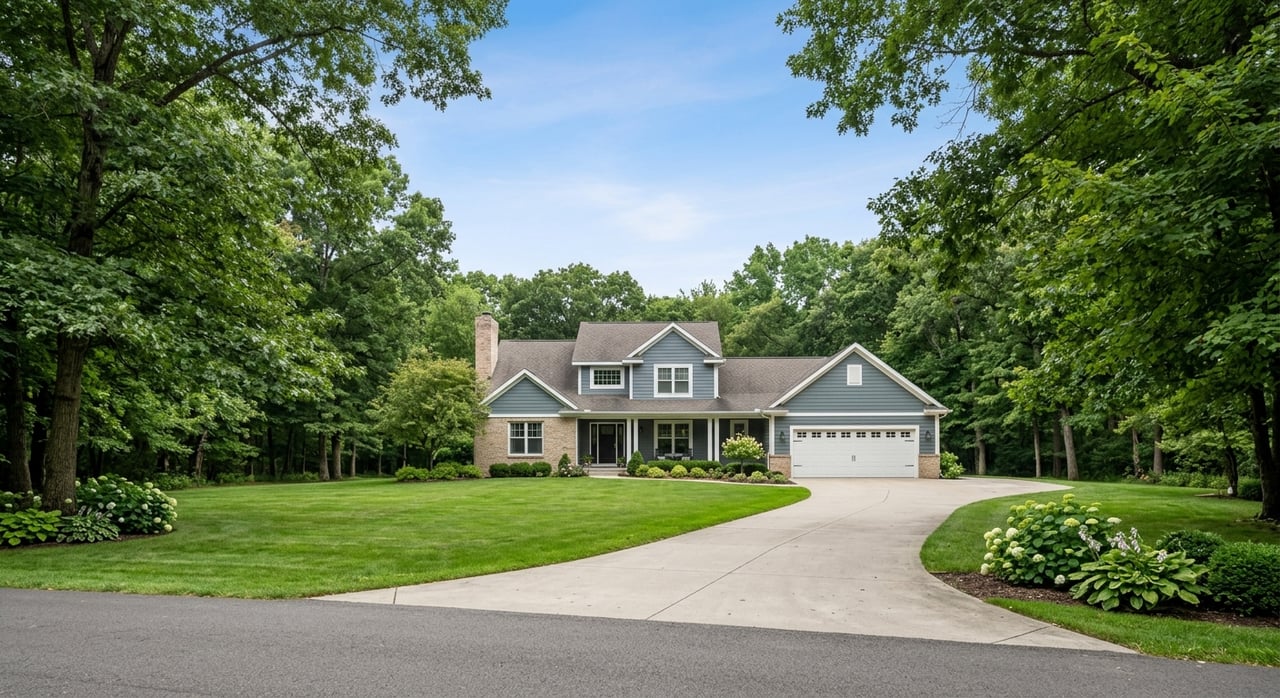
Thinking about trading a standard suburban lot for more land, more privacy, and more flexibility? If Orono or Long Lake is on your radar, you are looking at two nearby markets that can feel very different once you get into lot sizes, zoning, utilities, and future property use. This guide will help you understand where true acreage is more common, what to watch for before you buy, and how to approach the process with confidence. Let’s dive in.
Orono vs. Long Lake Acreage
If your goal is a true acreage property, Orono is usually the clearer fit. City planning documents show that much of Orono was rezoned to 2-acre minimum lots across about 80 percent of the land area, and the current RR-1B rural-residential district still has a 2-acre minimum lot size.
Long Lake has a different land pattern. Its base single-family zoning districts are 10,000 and 12,000 square feet, and the R-4 district is 14,500 square feet, which is roughly 0.23, 0.28, and 0.33 acre. That means Long Lake can still have some larger, custom, or estate-style properties, but true acreage homes are generally less common and more site-specific.
Price trends reflect that difference too. In March 2026, Redfin reported a median sale price of about $1.54 million in Orono compared with $616,000 in Long Lake. For buyers, that helps frame Orono as more of a higher-end acreage and estate market, while Long Lake tends to offer a broader mix of home types and lot sizes.
What Acreage Living Can Offer
Acreage is about more than just a larger yard. In Orono, planning documents describe low-density rural areas that may include older homes, orchards, greenhouses, hobby farms, and recreation areas. In real terms, you may be buying privacy, mature tree cover, room to spread out, and a property that offers more flexibility than a typical in-town lot.
That said, more land does not mean unlimited freedom. A property may have space for an outbuilding, workshop, or other accessory structure, but local rules still apply. The right acreage home is often the one that fits both your lifestyle now and your plans for the next five to ten years.
Accessory Buildings and Future Plans
If you want extra garage space, a detached building, or flexible-use space, start with the rules before you fall in love with the property. Orono requires a building permit for accessory buildings over 200 square feet, and allowable accessory-building footprint depends on lot size. On lots over 14.01 acres, accessory-building footprint can equal 1.3 percent of the lot area, while smaller lots have tighter limits.
That matters because two acreage homes can look similar online but offer very different options after closing. One may have room under the code for the outbuilding you want, while another may already be at or near its limit.
In Long Lake, buyers should be especially careful if they want an accessory dwelling unit. The city says the property must be at least twice the minimum lot size for the zoning district and must be connected to city water and sewer. If your long-term plan includes guest space, caretaker space, or rental flexibility, you will want to confirm lot size, zoning, and utility service early.
Why Parcel Layout Matters
On acreage properties, the lot itself needs a closer look. In Orono, the zoning code says a parcel split by a road or road easement cannot be combined across that road to meet minimum acreage, setback, open-space, or septic requirements. A listing may show total land area, but how that land is laid out can affect what the property actually allows.
This is one reason acreage buyers should not rely on marketing language alone. Survey review and title review are important because they help confirm how the parcel functions under the code, not just how it appears on paper.
Septic and Well Checks
Many acreage buyers need more than a standard home inspection. If the property has a septic system, Hennepin County says a sale does not require a county septic inspection, but many lenders require a compliance inspection. The county also notes that compliance inspection reports must come from a private septic professional, not the county.
In Orono, non-sewered lots also need suitable primary and alternate septic sites, and approval is allowed only when those sites are protected by covenant. That raises the stakes on due diligence because septic location, backup areas, and recorded restrictions can directly affect the property’s future use.
If the home has a private well, water quality should also be part of your review. The Minnesota Department of Health says private well owners are responsible for regular testing, recommends annual testing for coliform bacteria and nitrate, and does not require well testing or inspection at transfer, even though lenders may. For buyers, that means well testing is a practical step, not something to assume is automatically handled.
Private Roads and Access Issues
Acreage properties can come with more customized access arrangements than a typical neighborhood home. Orono planning documents note that some rural roads are privately owned and maintained by the landowner. That can affect not just convenience, but also maintenance expectations and how access rights are documented.
If a property uses a private road or road easement, ask for the details before closing. You will want to understand who maintains the road, whether there are shared obligations, and how access is recorded in title documents.
Shoreland Rules Near Water
Some acreage homes in Orono and Long Lake may also be near lakes, wetlands, or other regulated water features. In those cases, shoreland rules add another layer to your due diligence. The Minnesota DNR says shoreland standards address setbacks, building height, impervious surface, vegetation removal, and land alteration, while local governments administer the rules.
The DNR also highlights limits on clearing vegetation in shore impact and bluff impact zones, along with grading and filling restrictions. If your dream includes adding a deck, expanding a patio, clearing views, or changing the shoreline area, you will want to confirm what is allowed before you buy.
Covenants and Recorded Restrictions
Acreage value often comes from flexibility, but recorded restrictions can shape what flexibility really means. In Long Lake, the city notes that plumbing for an accessory dwelling unit may require a covenant. The city also notes that the Stoneridge Colony development is governed by recorded covenants filed on title.
That is why buyers should ask for all recorded documents that may affect property use. This can include declarations, bylaws, HOA rules if any, and title covenants. Even on a large lot, there may be restrictions on additional buildings, utility changes, or how parts of the property can be used.
How to Make a Smarter Acreage Offer
A strong acreage offer usually includes more verification than a standard suburban purchase. The goal is not to overcomplicate the process. It is to make sure the land, structures, systems, and future plans all line up before you are fully committed.
Here are some of the most important items to review:
- Septic inspection or compliance review if applicable
- Well water testing if the property uses a private well
- Survey or boundary verification
- Easements and access rights
- Title covenants and recorded restrictions
- Shoreland or wetland constraints
- Zoning rules related to outbuildings, additions, or an ADU
- Utility service details, especially in Long Lake for ADU planning
- Private road maintenance responsibilities if applicable
If you already know you want to add a building or make changes after closing, that should be part of your due diligence from day one. Long Lake’s planning process notes that land-use applications are reviewed by staff, then the Planning Commission, and finally the City Council. That timeline and review path matter if your purchase decision depends on future improvements.
Best Fit for Different Buyers
If you want more consistent access to larger lots, privacy, and a rural-residential feel, Orono will usually offer more options. It is often the better match for buyers who prioritize land as a core part of the purchase.
If you want to stay close to the Lake Minnetonka area but are open to a more mixed housing stock, Long Lake may still be worth a look. You may find select larger or custom properties there, but you will likely need to be more precise about zoning, utilities, and what the site can support.
The right choice depends on how you plan to use the property. If acreage is mainly about space and privacy, your search may look different than if you want a detached building, guest quarters, or room for future site changes.
Buying an acreage home in Orono or Long Lake can be incredibly rewarding, but it is also one of those purchases where details matter more than they first appear. With the right local guidance, careful document review, and a clear understanding of your long-term goals, you can move forward knowing the property fits both your lifestyle and the rules that come with it.
If you want help comparing acreage options around Orono, Long Lake, and the Lake Minnetonka area, connect with Avenues & Acres Home Team for patient, concierge-level guidance built around your goals.
FAQs
What makes Orono a stronger acreage market than Long Lake?
- Orono has a rural-residential pattern with many 2-acre minimum lots, while Long Lake’s base single-family districts are much smaller, typically around 0.23 to 0.33 acre.
What should buyers check before purchasing an acreage home in Orono?
- Buyers should review septic and well details, survey boundaries, easements, title covenants, private road access, and zoning rules for any future outbuildings or site changes.
Can you build an accessory dwelling unit on a Long Lake property?
- It depends on the property. Long Lake says the lot must be at least twice the minimum lot size for its zoning district and must be connected to city water and sewer.
Do acreage homes in Hennepin County require a septic inspection at sale?
- Hennepin County says a sale does not require a county septic inspection, but many lenders require a compliance inspection, and buyers often choose to have a private septic professional inspect the system.
Why is a survey important when buying acreage in Orono?
- Parcel layout can affect whether a property meets zoning and septic rules, especially if land is split by a road or road easement.
Do shoreland rules affect acreage homes near water in Orono or Long Lake?
- Yes. Shoreland rules can affect setbacks, vegetation removal, impervious surface, grading, and other site changes, with local governments administering those standards.